Showing posts with label speculative fiction. Show all posts

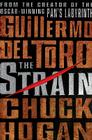
not-so-sexy vampires: THE STRAIN

Sunday, April 26

these vampires don't sparkle. not even a little bit. and if they're playing baseball, it's probably with your head.

Guillermo Del Toro and Chuck Hogan breathe new, fetid, life into the vampires of our nightmares. i don't want to give away the specifics, but these vampires Are. Completely. Terrifying. Del Toro is a pro at bringing the supernatural into vivid, eery, disturbing life (i'm thinking particularly of Pan's Labyrinth, although the Hellboys give most comic-based horror movies a run for their money), and THE STRAIN retains all his cinematic genius. i haven't read any Chuck Hogan, so i'm not sure where his influence comes in -- i assume that the literary style (sparse, action-centric, and fast-paced, the book reads like a really well-done book-based-on-the-movie) is his, but that is really an assumption. no lightweight first installment, THE STRAIN does more than set the stage for the trilogy: it could have been a trilogy all on its own. at times predictable in plot, and with characters you'll want to periodically yell at, it's far from perfect, but it's a great addition to the horror genre and a much needed antidote to the saccharine and sexy vampire novels of late. 

santa olivia

Sunday, March 29


i first discovered Jacqueline Carey years ago through a review at Salon.com which, due to link rot, i can no longer find. the gist of the review (as i remember it) was that her Kushiel's Legacy series was an intriguing look at politics disguised as sexy fantasy novels. understandably compelling. so i picked up, ironically, the first book of the Kushiel's Scion series, which actually comes after the Legacy books -- a little confusing, but sufficiently followable to get me hooked on her and the entire Legacy/Scion set.

i read them all and then, as tends to happen when you read books, they were over. sigh.

add that nostalgia to my triumph at having dug myself out from under the avalanche of ARCs at work, and you can understand my glee at locating a review copy of Santa Olivia, her newest novel. especially after skimming the back -- the combination of the phrase "Wolf-Man" with the heroine's name, Loup Garron (which, as any Dresden Files fan will know, is a play on the loup-garou werewolf legend) led me to believe that i had in my hands a contemporary werewolf novel.

this is not exactly the case. let's just say that no one is furry. however, this should not deter any SF/F fans from giving it a read because, like her Kushiel books, it's an intriguing look at politics disguised as a sexy science fiction novel.

Carey takes the politics of terror, specifically, and sets the story in an America that, while theoretically a future dystopia, is eerily familiar. Santa Olivia has all the components of a great story -- action (she manages to make boxing interesting, which to me is no mean feat), sex (less than her other works, but still plenty) and romance, endearing characters, and an excellently gritty feel to the setting and language -- but more importantly, it does what really good science fiction can do: it shines a very bright spotlight on things we'd rather overlook. how easily we give up freedom, how hard it is to regain, and what compels us to work that hard are integral questions here, questions that, while they're answered for Loup Garron, will leave readers wondering what their own answers might be.

this political touch, plus the sections of the novel narrated by teenaged Loup, make this a good candidate for a YA crossover as well, specifically the highschool crowd. Santa Olivia pubs late May 2009.

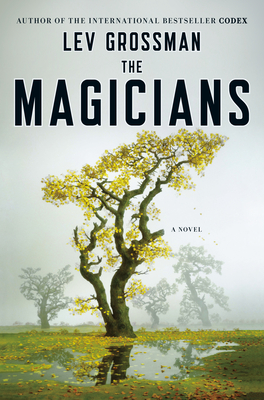
my love/hate relationship with THE MAGICIANS

Sunday, March 22


the blurb on the back of this ARC (plus the pretty, pretty cover) really sold me. magic in the real world? loosely disguised Narnia? nightmares and shocking truths? yes! well, except for the phrase "coming-of-age" -- that always makes me want to not read a book. too many high-school english class connotations. but i went ahead and read it anyway.

and i loved it! it's Harry Potter plus some Narnia plus sex, booze, lies, guilt, and other actual human emotions! the beautiful thing about the Harry Potter and Narnia series, and books like them, is that they are perfectly suited to reinforce moral codes: bad people are bad, good people are good (although they sometimes may make mistakes), and when you try and fight the good fight, you know exactly which side you should be fighting for. it's what makes them great reads for children (aside, of course, from the magic). but that's also the unrealistic thing about HP and Narnia (aside, of course, from the magic): good people aren't always good and bad people aren't always bad, and sometimes what appears to be the right side is absolutely not. and sometimes you don't even want to fight the good fight, sometimes you just want to go away and have a cocktail and see who comes out on top. and no, you don't necessarily want your 10-year-old to wrestle with the reality of these things. but if you're an adult (or teenager) reading Harry Potter, don't you find yourself wondering if Harry and Ron ever snuck up to the Astronomy Tower with something a bit stronger than butterbeer to get a buzz on? or if Hermione smuggled in some caffeine pills to help her stay awake during all that Time Twisting?

i definitely wondered, and so did Lev Grossman. THE MAGICIANS really, truly, does an excellent job imagining what we'd all be like if we could actually do magic and/or get to Narnia. sure, we could make pretty lights appear out of nowhere and levitate and shoot static charges at each other from across the room, but we would also cheat on our tests, sleep with the wrong person, make friends who are not good for us, have torturous childhoods, and in general continue to be dissatisfied with our lives. in other words, magic doesn't make us any less human or angsty or damaged. if you're like me, this thought makes you giddy with the sheer audacity of the premise. if it makes you cringe, then don't read this book.

so there's the love, now for the hate. yes, reality does often involve drinking. lots of teenagers (as much as we'd like to think otherwise), college students, and many, many adults drink. some more heavily than others. but everyone, and i mean EVERYONE, in THE MAGICIANS is constantly drinking, drunk, or hung-over and contemplating their next fix. always. all the time. every waking moment. some of it "sanctioned" by the magical Academy, and some of it "extracurricular." and these are supposed to be the brightest of the bright, the creative creme de la creme, collected together for the express purpose that they have talents no one else has. and ... they're all alcoholics? why, Lev Grossman, why? i understand that it's key to a specific character's development in the story. but all of them? all the time? now really. i knew a lot of very bright, very creative kids in high-school and college, and i can assure you that while they did indulge, the frat/sorority population was far more likely to behave the way Grossman's characters behave. unless he's going with the "tortured artist" cliche, but usually artists tend to be a bit older than 18 when they hit that point in their lives. i mean, Hemingway was probably a pretty tortured teen, but it took him years to work up to the level of debauchery that THE MAGICIANS' protagonists achieve.

i would really love to hear from the author about this -- if you're out there Googling yourself, please comment! i'm also curious to see if anyone else who has read the book feels the same way -- maybe i'm out of line here? unless and until those comments come, however, i will have to just continue to be torn. THE MAGICIANS pubs August '09.

the yuck factor

Sunday, December 30

i was a vegetarian for about 10 years, and still can't eat red meat. that probably explains my initial reaction to The Inferior, by Peadar O Guilin. he uses the word "flesh" at least once a sentence, and always in reference to food. there's a reason for it -- a (theoretically) integral to the plot reason for it, but still.

however, i persevered, and got past my knee-jerk reaction (though i'm betting i made a face every time i read it) and, well, yeah. the back of the book says "With echoes of Tarzan, Conan, and The Truman Show, Peadar O Guilin's debut is an action-and-ideas packed blockbuster that will change your perceptions of humanity and leave you hungry for more."

aside from what i consider the incredible crassness of the phrase "hungry for more," given the above "flesh" thing, it's not a bad blurb. there is a lot of Tarzan in it -- i couldn't say about the Conan reference, never having read it -- with spears and hunting and jungly tribal stuff. the ending is a pretty clear reference to The Truman Show, and there is an awful lot of action.

but i didn't like this book. i think i'm not the right audience. this is the kind of book that will make an amazing video game, and would indeed make a standard blockbusting action movie. but that didn't make it a good read.

why didn't i like it? aside from the yuck factor, of course. well, like i mentioned above, the ideas seemed there more as an aside than as the point, and were muddled on top of that. when i finished the book, after the (theoretically) stunning conclusion, the only thing i could think was that the book was either too long or too short.

the way in which it all ties together at the end (i.e., the way in which they connect Tarzan and Conan with The Truman Show) was a little sloppy. it kind of reminded me of an episode of Lost. lots of really insane conspiracies, possible red herrings, inexplicable appearances and disappearances, weird intercepted technology, and no real hope of it all ever being reconciled. (i will now be promptly stoned by Lost fans; all i can say is, i calls it like i sees it.) so either there needed to be less of all the conspiracies and red herrings and inexplicable happenings, or the book needed to be longer to really and truly tie them all together.

that being said, it would make a great video game, and i can see a lot of guys (i'm thinking 12 to 18) really enjoying it for the admittedly well done action and the truly bizarre concept. not to mention fans of Lost.

crossing over

Thursday, December 20

i don't know if it's something that's new, or if i just didn't realize it before. but it seems that there are a lot of books out there right now that are crossing the line between the "young" reader (aka middle and young adult) and the adult reader. for example, Harry Potter. or the Twilight series. as a bookseller, i'm increasingly approached by adults who are looking for these books for themselves.

The Adoration of Jenna Fox
, by Mary E Pearson, exemplifies this phenomenon. what would be considered straight-up literary speculative fiction* is rendered young adult simply because the protagonist is seventeen. Adoration is the gripping story of Jenna Fox, who may or may not have been in a coma for a year, and may or may not be Jenna Fox at all. thoughtful and challenging without being heavy-handed, Adoration is a fascinating and timely look at human identity and the ethics of advanced medicine. the characters are engaging, and Jenna and her school mates in particular are fun, intriguing, and a little saddening all at once.

i don't really believe in the canon for the most part, but this book belongs in schools, and on the shelves of every thinking person out there.

*by literary speculative fiction, i mean something along the lines of Never Let Me Go by Ishiguro, or The Road by McCarthy. something that takes place in a near future, and may have science fiction elements, but that you're going to find in the fiction section of a bookstore.

werewolves, the musical

Saturday, November 17

my favorite blurb from the ARC cover:

"Forget any reservations you might have about werewolf stories or verse novels. This is great, engaging, wonderful stuff. Sondheim should make it his next musical." --Michael Moorcock, author of The White Wolfe's Son.
let me say now that i'm not a fan of Michael Moorcock. but that's beside the point. this is my favorite blurb because not only is it completely absurd (a Sondheim musical about werewolves? and some people think CATS is bad ... ), it also encapsulates the absurdity of the book itself.

Sharp Teeth
, by Toby Barlow, is a VERSE NOVEL about WEREWOLVES. excuse the capitals.

let's start with the part where it's a "verse novel". what is a "verse novel"? i was completely unaware of the phenomenon. the only thing i've read that looks similar on the page is Seamus Heaney's translation of Beowulf (the best one out there, for my money). but that's a translation of an actual epic poem. hence, it is in verse. Sharp Teeth is not a translation, and i wouldn't call it an epic. it's written in plain verse (or prose poetry, or whatever the heck it's called when the lines don't rhyme or match rhythmically), and i'm not 100% sure why. i honestly couldn't tell you if it would make a difference if it looked like prose -- the writing doesn't seem, to me, to benefit from being chopped up into different lines and spread out along the page. it would also save paper.

but enough about that! it's werewolves! we love werewolves, right?

well, actually, yes we do. but i can't remember the last time i read a story/book i liked about werewolves. wait, yes i can: Jacob Black is likely to go down in history as the werewolf most teenage girls would like to go to prom with, and Patricia Wrede's Book of Enchantments has a lovely short story in which werewolves feature. (the point i was trying to make is that there are an awful lot of bad/mediocre/ok/pretty good/cult classic movies about werewolves that i would watch, or at least consider watching, but i can't say the same for books.)

i wouldn't call Sharp Teeth lovely, for the same reasons i can't see it as a musical -- there is an awful lot of blood, sex, guts, suicide, murder, gang violence, and revenge. (on second thought, maybe it would make a good musical. it's just hard to imagine someone singing about gang violence without having flashbacks to my high school's production of West Side Story. which actually proves the point, now that i think about it; how much better would West Side Story have been if it was about werewolves? lots better. maybe Michael Moorcock deserves more credit than i give him.)

ANYWAY, what i'm trying to say here is that i liked Sharp Teeth, despite it's being a verse novel. having lived in Los Angeles, where the action takes place, i find it not unbelievable that werewolf gangs could attempt to stage a coup. it's a surprisingly original and thoughtful (not a word often applied to werewolf stories) take on an overdone theme. there are some fantastic beach scenes, which is one easy way to win me over. and Toby Barlow handles complex emotion remarkably well, which gave the story some reprieve from the aforementioned action. if i had to characterize it by comparing it to another author, i'd say it's Bloodsucking Fiends, minus the Christopher Moore wacky humor.

so! if you're not afraid to spend some time figuring out how to properly read a verse novel, and you like werewolves (or vampires, this is a good adult cure for post-Twilight/New Moon/Eclipse angst), then you will like Sharp Teeth, and i apologize for all the rambling it took me to get to that sentence.